How to Respond to Negative Reviews on Your Google Business Profile
- Katina Ndlovu

- Mar 6
- 6 min read
Updated: Mar 26
Introduction: Turning Criticism into Opportunity for South African Businesses
Negative reviews are an inevitable part of business. For South African entrepreneurs, they offer invaluable opportunities to demonstrate exceptional customer service and gain insights. Effectively responding to negative feedback on your Google Business Profile (GBP) reinforces brand commitment, improves online visibility, and fosters trust. This guide equips you with strategies to transform critical comments into positive engagements. The core answer is to respond promptly, professionally, and empathetically, always aiming to take the conversation offline for resolution while demonstrating a commitment to customer satisfaction and continuous improvement.
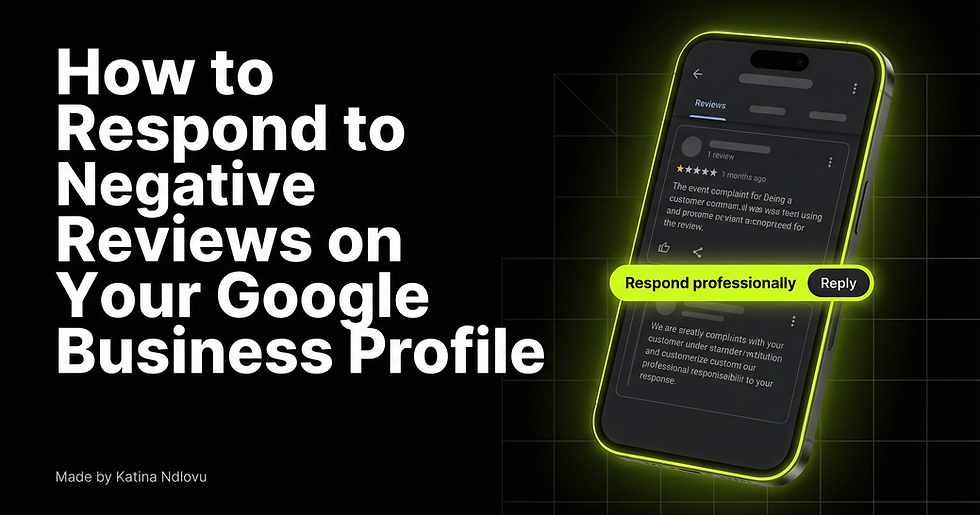
Respond to negative reviews Google Business Profile
Why are Google Business Profile Reviews Indispensable for South African Businesses?
How do reviews profoundly impact local SEO in South Africa?
Google Business Profile reviews are critical drivers of local business rankings in South African search results. Google prioritizes businesses with a strong, active, and reputable online presence. Reviews serve as a powerful signal; high volumes of positive reviews and thoughtful responses indicate a valued business. This boosts visibility in local search packs and Google Maps, making it easier for potential customers in Johannesburg, Cape Town, or Durban to find your services. A Market Insights Africa study [1] revealed that South African businesses with over 50 Google reviews experienced an average 35% increase in local search visibility. A robust review profile can be the decisive factor for consumers searching for services like "best plumber in Pretoria" or "top restaurant in Sandton."
What is the pivotal role of reviews in building trust with South African consumers?
In South Africa, where word-of-mouth holds immense cultural and commercial weight, online reviews are the modern equivalent. South African consumers are increasingly tech-savvy, routinely consulting GBP reviews before purchasing. They view these reviews as authentic testimonials. Businesses actively engaging with reviews, especially negative ones, demonstrate transparency, accountability, and genuine commitment to customer satisfaction. These qualities are crucial for cultivating long-term trust and loyalty. An SA Business Review Quarterly survey [3] found that a remarkable 78% of South African consumers trust online reviews as much as personal recommendations. This trust is vital in hospitality, retail, and professional services.
What are the Foundational Principles for Responding to Negative Reviews?
Why is a prompt and professional response absolutely crucial?
Timeliness in responding to negative feedback is paramount. A swift response, ideally within 24-48 hours, signals to both the disgruntled customer and the wider online audience that you value their input and are proactive. Delays can be perceived as indifference, exacerbating frustration. Maintaining a professional tone, even with harsh criticism, is essential for preserving brand integrity and preventing escalation. Research from the Journal of Digital Marketing & African Business Studies [2] demonstrates that businesses responding within 24 hours to negative feedback experience a significant 60% higher customer retention rate.
How can empathy and understanding effectively de-escalate challenging situations?
Approaching a negative review with genuine empathy means actively recognizing and validating the customer's feelings and experience, even if you disagree. Phrases like "I understand your frustration" or "I'm truly sorry to hear about your experience" significantly de-escalate tension. Demonstrating this level of understanding shows you are listening and genuinely care about their satisfaction, creating an opening for constructive dialogue. This human touch resonates deeply with South African consumers, who highly value genuine connection and personalized service.
When is it strategically best to take the conversation offline?
While an initial public response demonstrates transparency, moving detailed problem-solving discussions offline is almost always the most effective strategy. This protects customer privacy, allows for in-depth resolution, and prevents a protracted public back-and-forth that could harm your brand. In your public response, provide a clear and direct contact method (e.g., dedicated email or phone number) and invite the customer to discuss the matter further in a private setting.
How to Craft an Exemplary Response to a Negative Review (A Step-by-Step Guide)
What constitutes the ideal structure for a negative review response?
An exemplary response to a negative review is clear, concise, empathetic, and professional. It ensures the customer feels heard, understood, and valued. The ideal structure includes:
Acknowledge and Express Gratitude: Thank the customer for their feedback.
Offer a Sincere Apology: Apologize for the inconvenience or dissatisfaction without excuses.
Briefly Address the Core Issue: Reference the specific problem to show attentiveness.
Propose a Concrete Solution or Path to Resolution: Offer a tangible step, often moving offline.
Reiterate Commitment to Customer Satisfaction: Reinforce your dedication to excellent service.
How can you effectively acknowledge the customer's experience with authenticity?
To authentically acknowledge a customer's experience, begin by thanking them for their feedback. Then, specifically reference their complaint to demonstrate genuine understanding. For instance, if a customer at your Pretoria restaurant complains about slow service: "Thank you for your valuable feedback, [Reviewer Name]. We sincerely apologize for the extended wait time you experienced during your recent visit to our Pretoria branch." This validates their feelings and sets the stage for resolution.
What concrete steps can you take to offer a meaningful solution or apology?
Following acknowledgment, offer a genuine and heartfelt apology. Briefly explain what might have gone wrong without making excuses. Then, offer a tangible solution or a clear, actionable path to resolution. This could be an invitation to contact you directly for a refund, a complimentary service, or a promise to investigate. For example: "We are committed to making this right for you. Please contact our dedicated manager, Sipho Dlamini, directly at [phone number] or [email address] at your earliest convenience so we can address this personally and find a satisfactory resolution."
How do you meticulously maintain a positive brand image throughout your response?
Every GBP response is a public declaration about your brand's values. Consistently maintain a polite, professional, and positive tone. Avoid jargon. Your response should unequivocally reflect your brand's unwavering commitment to delivering excellent service. Potential customers read these responses to gauge your reliability. Your professionalism and grace under pressure can transform a negative review into a powerful testament to your customer service, enhancing your brand's reputation.
What are the Common Pitfalls to Assiduously Avoid When Responding to Negative Reviews?
Why should you never, under any circumstances, get defensive or emotional?
It's natural to feel defensive when criticized, but reacting emotionally in a public forum can severely damage your reputation. Defensive responses appear unprofessional and dismissive, escalating the situation. Always compose yourself before responding, ensuring your reply is calm, rational, and focused on resolution, not justification.
What are the inherent dangers of generic or templated responses?
While templates can save time, relying on overly generic or impersonal responses appears insincere and frustrates unhappy customers. Each negative review is unique; your response should reflect this individuality. Personalize replies by referencing specific details from the original review. This demonstrates genuine understanding, making your apology and proposed solution more credible.
How can you meticulously avoid making promises you simply cannot keep?
Be realistic, honest, and transparent about what you can genuinely offer and deliver. Making unfulfillable promises leads to further customer disappointment, erodes trust, and damages credibility. If you commit to a follow-up, ensure it happens promptly. If you offer a discount, ensure it's honored. Honesty and integrity are the cornerstones of rebuilding trust.
FAQs
1. How should I respond to negative reviews on Google Business Profile?
Respond promptly, professionally, and with empathy. Acknowledge the issue, apologise, and offer a clear path to resolution.
2. How quickly should I reply to a negative review?
Ideally within 24–48 hours to show responsiveness and commitment to customer satisfaction.
3. Should I take negative review conversations offline?
Yes. Provide contact details and move detailed discussions offline to resolve issues privately and effectively.
4. Why are Google Business Profile reviews important for SEO in South Africa?
They influence local search rankings, visibility in Google Maps, and consumer trust, especially in competitive local markets.
5. What should I avoid when responding to negative reviews?
Avoid being defensive, emotional, or using generic responses. Do not make promises you cannot fulfil.
6. How do negative reviews impact customer trust?
They can reduce trust if ignored, but well-handled responses can increase credibility and demonstrate accountability.
7. Can responding to reviews improve my business reputation?
Yes. Thoughtful responses show professionalism and care, which strengthens brand perception and customer loyalty.
Conclusion: Mastering Your Digital Footprint and Reputation in South Africa
In today's interconnected digital landscape, your Google Business Profile frequently serves as the very first impression potential customers have of your business. Mastering the art of responding to negative reviews is not merely a reactive task; it is a proactive and indispensable strategy that underpins your entire online reputation, significantly enhances your local SEO performance, and builds invaluable, enduring trust with South African consumers. By embracing criticism with professionalism, profound empathy, and an unwavering commitment to resolution, you possess the power to transform challenging situations into powerful opportunities for growth, learning, and brand advocacy.
References
"The Digital Consumer Landscape in South Africa: 2023 Report" - *Market Insights Africa*.
"Optimising Google My Business for Local Search in Emerging Markets: A Case Study of South Africa" - *Journal of Digital Marketing & African Business Studies*.
"Customer Service Excellence: A South African Business Imperative in the 21st Century" - *SA Business Review Quarterly*.
If your business has evolved but your brand still reflects an earlier version of what you do, this work focuses on realigning positioning so your expertise is understood accurately.
You can explore related case studies below or get in touch to discuss how your brand is currently being positioned and interpreted.


Comments